Your Thrift Store Blazer Is One Beaded Pin Away From Being Your Best Piece
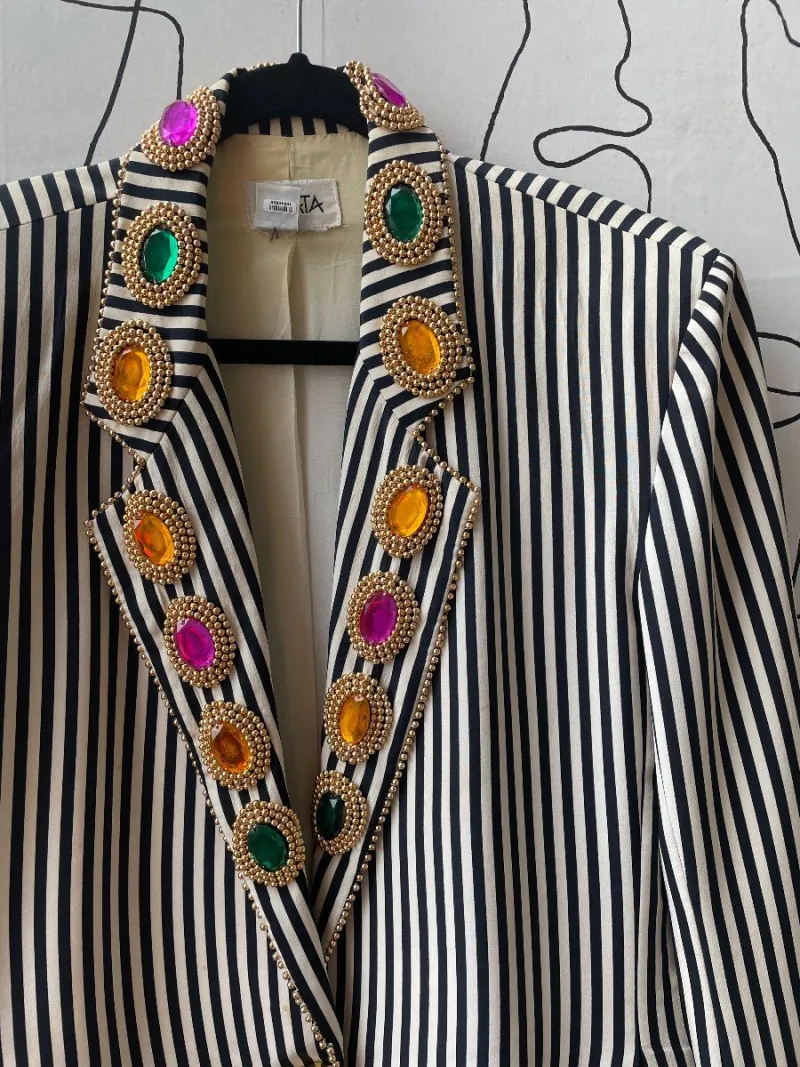
Photo: handmade beaded lapel pin on thrifted blazer jacket close up, via d328c8xxrtt5uf.cloudfront.net
Let me set the scene: it's a Saturday morning, I'm at the Goodwill on Route 9, and there's a rack of navy blazers that all look like they were retired from the same insurance office. One of them fits like a dream and cost less than a fancy latte. Three dollars. The problem? It was a little... beige. A little forgettable. A little please don't notice me.
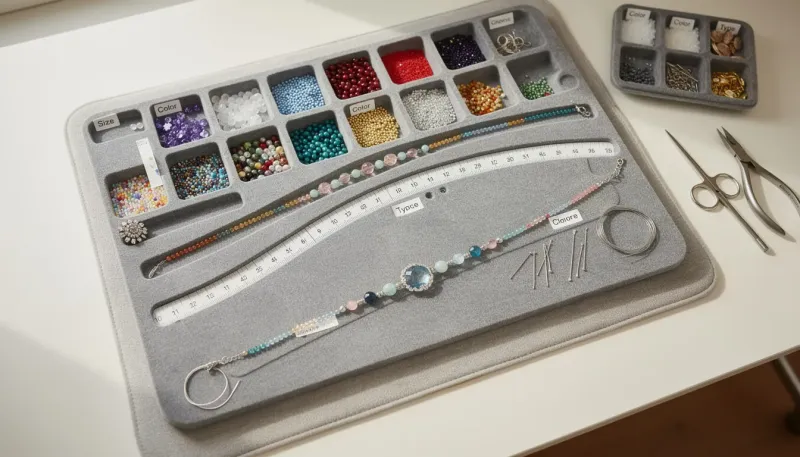
So I did what I do. I went home, dumped out my bead stash, and stitched a small beaded cluster onto the left lapel. Two hours later, I had a jacket that looks like it came from an independent designer's Etsy page — and I get asked about it constantly. Not by other crafters, either. By strangers. In line at Target. At my nephew's soccer game.
Here's how to pull it off on your own thrift find.
Start With the Right Jacket, Not the Right Beads
The fabric matters more than you'd think. Wool blends, heavy cotton twill, and stable linens are your friends — they hold stitches without puckering and won't shred under thread tension. Skip anything slippery, anything knit, and anything with a loose weave. If the fabric snags when you run your fingernail across it, your thread will catch on it forever.
Also, hold the jacket up in natural light before you buy. That's the light people will actually see you in, and it's the light you'll use to match bead colors later. I once bought a "black" blazer that turned out to be deep plum under daylight, and my black beadwork clashed beautifully. Beautifully wrong.
The Color-Matching Trick That Changes Everything
Don't match your beads to the fabric. Match them to the undertone of the fabric, then go one step brighter.
Lay three or four candidate bead colors directly on the lapel and step back five feet. The one that looks like it belongs but still catches your eye — that's your winner. For my navy blazer, I used a mix of matte gold seed beads, a few champagne-colored fire-polished rounds, and tiny garnet accents. It reads expensive because it's restrained: three colors, maximum, in a small footprint.
Quiet luxury, as the internet keeps calling it, isn't about logos. It's about restraint and texture. A two-inch patch of hand-stitched beadwork in a tonal palette hits exactly that note for about four dollars in materials.
The Stitch That Survives the Washing Machine
Okay, honesty first: I recommend hand-washing or spot-cleaning anything with beadwork. But I know how real life works, so here's the most durable method I've found.
- Anchor with a knot cluster, not a single knot. Thread a beading needle with doubled Nymo or FireLine. Tie three overhand knots stacked together, then run the tail through the fabric before starting.
- Use a two-bead backstitch. Pick up two seed beads, send the needle down through the fabric about a bead's width away, then come back up between the two beads and pass through the second bead again. This locks each pair in place. It's the same principle as couching in embroidery, and it flexes with the fabric instead of fighting it.
- Stitch through, not onto. For larger focal beads, pass your needle through the bead at least twice in different directions. A bead held by one pass is a bead waiting to become a mystery rattle in the dryer.
- Finish with a surgeon's knot and a dab of Fray Check on the underside, tucked between the lining and the shell if your blazer has one.
I've machine-washed my pinned blazer twice now (gentle cycle, mesh bag, air dry) and haven't lost a single bead. Twice isn't a lifetime guarantee, but it's a strong start.
Where to Place Your Beadwork
The left lapel, about an inch up from the buttonhole, is the classic spot for a reason — it's where the eye lands first. But don't stop there:
- Collar points on a button-down shirt take tiny scattered beads beautifully
- Denim jacket pockets can handle a bolder, denser design
- Bag straps and zipper pulls are perfect for beaded charms attached with jump rings instead of thread — removable, so your bag survives the trend cycle
Start small. A two-inch motif looks intentional. A six-inch beaded eagle on the back of a blazer looks like a middle school art project, and I say that with love because I've made one.
The Budget Math That Makes This a No-Brainer
Thrifted blazer: $3–8. Seed beads from stash: essentially free if you're already a beader, maybe $6 for a full hank if you're not. Needle and thread: pennies. Total transformation: under $15 for a piece that looks boutique-made.
Compare that to the beaded-lapel blazers I've seen at craft fairs going for $85, and suddenly your Saturday afternoon has a very clear return on investment.
One Last Thing Before You Thread That Needle
Do a practice run on a scrap of similar fabric — an old pocket, a hem you cut off. Every fabric behaves differently under a needle, and ten minutes of practice saves you from picking stitches out of a lapel you can't un-pick.
And when someone at the coffee shop asks where you bought it? You have my full permission to smile and say, "Oh, this? It's one of a kind." Because it is. You made it.