I Sold Jewelry at a Farmers Market Every Saturday. Here's What Actually Sold (And What Flopped).
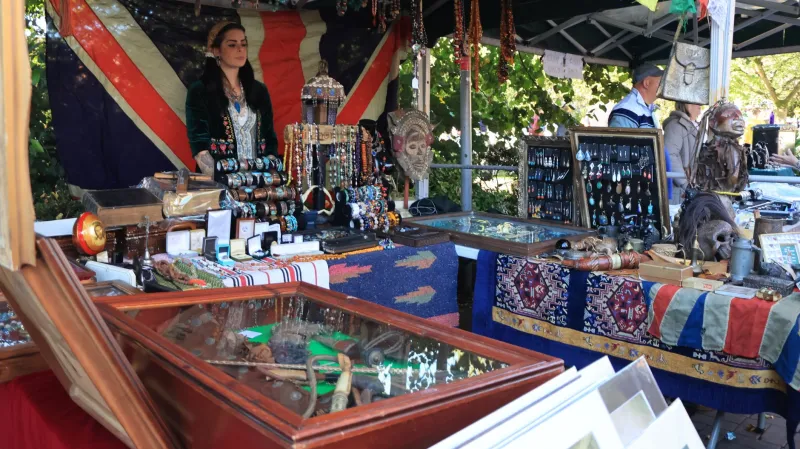
My first farmers market was a disaster, and I'm going to tell you about it so you don't have to live it. I spent three weeks making what I loved — intricate wire-wrapped pendants that took ninety minutes each. I priced them at $38 because that felt fair for my time. I sold exactly zero. The woman selling sourdough two booths over sold out by 10 a.m.
Three years later, my Saturday booth reliably clears a few hundred dollars in peak season. Here's the playbook, stripped of the Instagram fantasy version.
Step 1: Price With a Formula, Not Feelings
The biggest mistake new vendors make is pricing by vibes. You need math. Here's the formula I use:
Materials + (Your Hours × Your Rate) + Overhead = Cost. Then multiply by 2 for retail.
Let's run a real example. A beaded bracelet with $3 in materials, taking 20 minutes at a $25/hour rate: $3 + $8.33 = $11.33 in cost. Retail: $22–24. That feels scary when you're used to thinking of your hobby as "free," but here's the truth: if you price at cost, you've built yourself a job with no paycheck.
Round to clean numbers ($22, $28, $45). Odd pricing like $23.75 reads as desperate at a craft booth. And never — never — apologize for your prices. Customers can smell it.
Step 2: Build Inventory Around Three Price Tiers
This is the single change that made my booth profitable. Every market setup needs:
- Impulse tier ($8–15): Beaded stretch bracelets, simple dangle earrings. These are your sourdough. People grab them without thinking, and they fund your day.
- Middle tier ($25–45): Layered necklaces, gemstone bracelets, hoops with real presence. This is where your actual profit lives.
- Statement tier ($60+): One or two showstoppers. You might not sell them every week, but they make everything else look affordable, and when they sell, they sell.
My flop pendants weren't bad products. They were statement-tier pieces doing all the work alone, with nothing for a customer to grab on a whim.
Step 3: What Actually Moves at a Saturday Market
After dozens of markets, here's my honest sales data:
Sells consistently: earrings, always earrings. Bracelets sized for the average wrist (7 to 7.5 inches). Anything in your local team's colors. Anything you can put on the customer's wrist in five seconds.
Doesn't move: anything that requires explanation, anything that needs a mirror and ten minutes to try on, anything seasonal that's out of season. I once brought Halloween-themed earrings to an October market thinking I was clever. Turns out people buy their pumpkin earrings in September. Noted.
Step 4: The Booth Is a Storefront, Not a Table
You have about three seconds to stop someone walking past with a coffee. That means:
- Height beats flat. Use risers, crates, or a pegboard earring card display. A flat table is invisible.
- Clear signage with prices. If I have to ask what something costs, I've already walked past. Every single item gets a tag or a card.
- A mirror. Non-negotiable. Half my sales happen because someone tried a bracelet on and saw themselves in it.
- One way to pay. Square or Venmo QR code printed large and posted twice. Cash-only vendors are leaving money on the table, full stop.
Step 5: The Inventory Math Nobody Tells You
Here's my rule of thumb: bring inventory worth 4 to 5 times what you hope to earn. If your goal is $300 in sales, bring $1,200–1,500 retail value. Sounds like a lot, but remember your impulse tier — those $12 bracelets add up fast, and you'll restock the same designs every week.
Also: track what sells. I keep a note on my phone after every market. After six Saturdays, the data told me to stop making anklets and triple my earring output. My feelings about anklets were irrelevant. The data wasn't.
Your First Market Checklist
- Apply early — most markets book vendors months ahead, and fees run $25–60 per Saturday.
- Get your state sales tax permit before you sell, not after.
- Do a full mock setup in your living room the week before. Discover your table's too small at home.
- Bring a change box with small bills, sunscreen, water, and a friend for the first shift if you can swing it.
Will your first market be your best one? Almost certainly not. Mine wasn't. But if you price with math, stock three tiers, and make it easy for someone to say yes in five seconds, by week six you'll be the vendor people come back to find. See you there — I'll be the one with the earring cards and the iced coffee.