Estate Sale Treasure: How I Resurrect Dead Jewelry Into Pieces People Beg Me to Make
Let me say something that might be unpopular in the DIY world: I buy very few new beads.
Not because I'm precious about it, and definitely not because I'm above a craft store clearance aisle. It's because the best materials I've ever worked with came out of someone's junk drawer. A $2 baggie of broken necklaces from an estate sale in Ohio taught me more about design than any kit ever has.
So today I want to make the case for thrifted jewelry as a legitimate — no, a superior — source for your bead stash. Grab your coffee. This is a bit of a manifesto.
Why Vintage Beats New (Most of the Time)
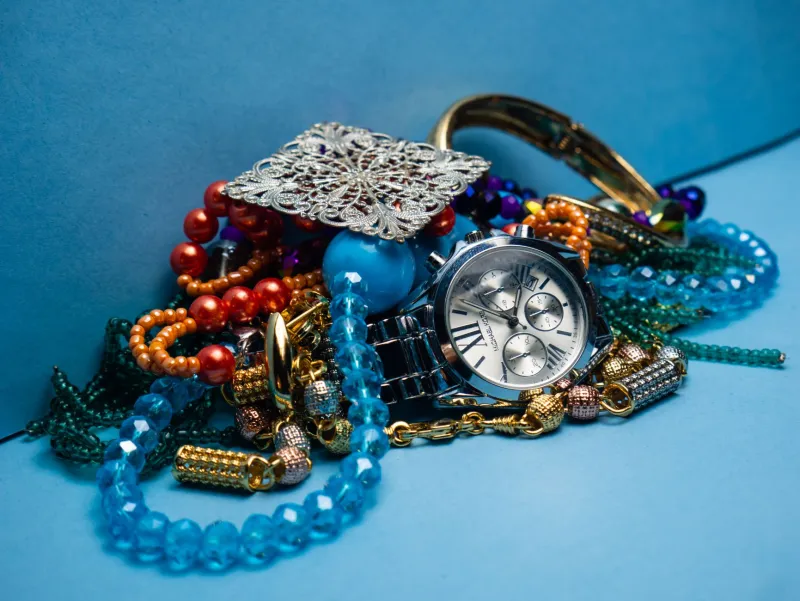
Here's the honest truth: a lot of vintage jewelry was made with materials you simply cannot buy at hobby-shop prices anymore. Genuine Czech glass, real freshwater pearls, solid brass findings, hand-knotted silk. Things that were mass-produced in the 1950s often out-quality what's mass-produced today.
And beyond quality? Every harvested bead comes with a story. When someone asks where you got that bracelet, "a broken 1960s necklace from a church rummage sale in Michigan" beats "Michaels" every single time. No shade to Michaels — I love you, Michaels — but you know I'm right.
What to Look For When You're Hunting
Estate sales, church rummage sales, Goodwill bins, Facebook Marketplace lots — they all work. Here's my shopping list:
- Broken anything. Damage means discount. A snapped strand is a bead jackpot.
- Single earrings. Nobody wants one clip-on. You want the beads on it.
- Heavy for its size. Heft often signals glass, stone, or metal over plastic.
- Interesting clasps. Vintage clasps are little works of art. I've bought necklaces just for the clasp.
- Ugly necklaces with great beads. The 1980s made some crimes against fashion. Inside those crimes: gorgeous acrylic and glass.
Fair Pricing (Because We're Not Out Here to Scalp Grandmas)
Most US thrift stores price costume jewelry between $1 and $8. Estate sales vary wildly, but I use a personal rule: if I can harvest at least ten usable beads or one great clasp, I'll pay up to about $5. For genuine materials — real pearls, sterling, or signed pieces (look for marks like Coro, Trifari, or Monet) — research before you lowball. Some of it's worth real money as-is, and there's a difference between thrifty and taking advantage.
Your Harvest Kit
You don't need much, but you need the right stuff:
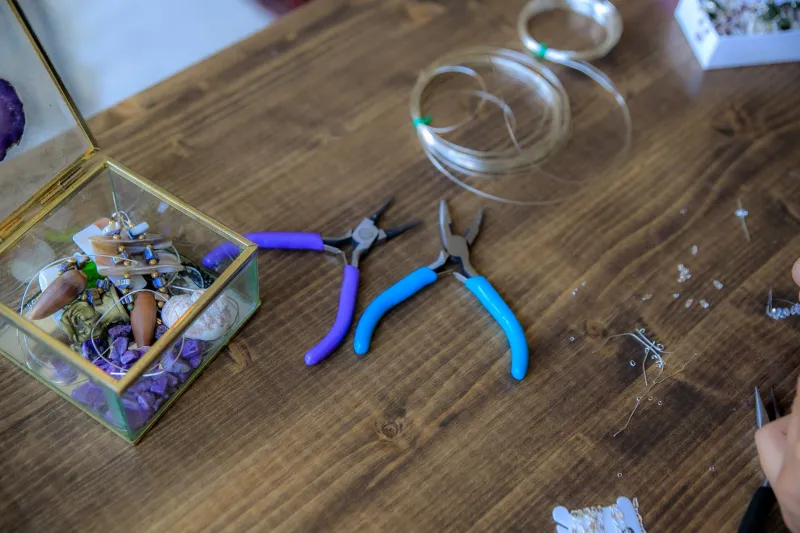
- Flush cutters for snipping wire and string
- Two pairs of chain-nose pliers for opening jump rings properly (one for each side — don't pry, twist)
- A bead mat with a lip, so nothing rolls away
- Small zip-top bags to keep sets together
- Patience — honestly the most-used tool
Work over a towel. Vintage stringing material is often brittle silk or degraded plastic, and beads will scatter. Also: wash your finds in mild dish soap and water, and let them dry fully before restocking.
Makeover Project #1: The Cluster Necklace
Take those single earrings and mismatched vintage beads and build a cluster pendant. Attach a vintage filigree stamping to a chain, then wire-wrap 5–7 harvested beads in graduated sizes dangling from it with 20-gauge head pins. One afternoon, and it looks like something from an Etsy shop charging $80.
Makeover Project #2: The Asymmetrical Stacker Bracelets
Sort your harvested beads by color family instead of by origin — this is the key move. Then make three skinny bracelets (memory wire makes this beginner-friendly) in related tones: one all pearls, one all glass, one mixed metals. Worn together they look like a curated set. Worn apart, three different stories.
The Part Where I Get Sentimental
Look — I get that ripping apart someone's old necklace might feel a little ruthless. But here's how I see it: jewelry that sits broken in a shoebox isn't being loved by anyone. When you rebuild it into something a person actually wears, you're finishing what the original maker started.
Somebody strung that necklace by hand in 1962. Somebody will love your remake in 2025. That's not destruction. That's a relay race.
So the next time you drive past a garage sale sign, pull over. Your next favorite bracelet is sitting in a $1 bin, waiting.